
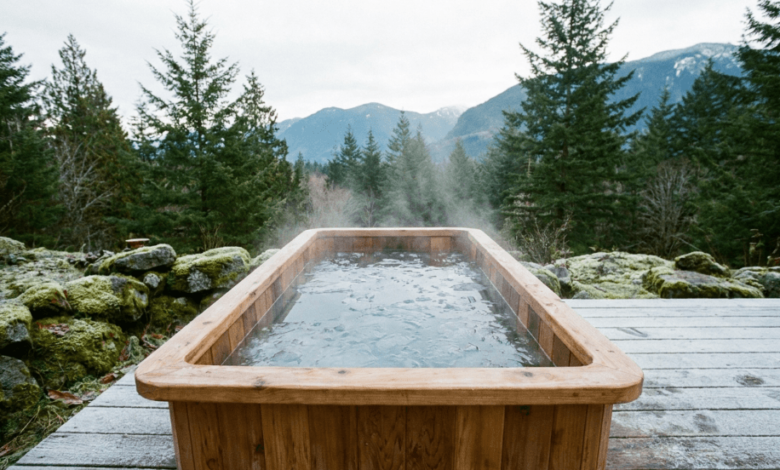
A self-contained cold plunge kit with a built-in chiller can usually be set up by a homeowner in a weekend for $2,500 to $6,000, running off a standard 120-volt GFCI outlet and filled with a garden hose. Professional installation adds roughly $1,000 to $4,000 on top of the unit price for a dedicated 240-volt circuit, a permanent drain line, and a proper pad or deck tie-in. The deciding factors almost always come down to three things: how much power the chiller draws, where the water goes when you drain it, and whether the tub is portable or built in.
What Does “DIY” Actually Mean With a Cold Plunge?
Most cold plunge tubs sold for home use are self-contained units. The chiller, pump, and filter live inside or attached to the tub itself, so setup is closer to placing a large appliance than building anything. You level a pad, plug the unit into an existing outlet, fill it with a hose, and the built-in system handles chilling and circulation from there. Draining usually happens through a built-in pump that pushes water out through a hose to a nearby drain or planted area. For a portable tub sitting on an existing patio, deck, or garage floor, this is genuinely a weekend project for anyone comfortable assembling flat-pack furniture and running a hose.
When Does a Cold Plunge Actually Need a Professional?
The line gets crossed in three common situations. First, chiller amperage: compact chillers built for tubs under roughly 100 gallons often run fine on a standard 120-volt, 20-amp GFCI circuit, but larger units built to chill 200 gallons or more down into the 39 to 50 degree Fahrenheit range frequently need a dedicated 240-volt line, which is electrician work. Second, permanent drainage: if you want the tub plumbed into an existing drain line instead of hosing water out onto the lawn every few weeks, that is a plumbing job. Third, anything built into a deck, patio surround, or in-ground installation needs framing, waterproofing, and often a permit, which moves the whole project into general-contractor territory rather than a single afternoon.
What Does Each Route Actually Cost?
A DIY setup keeps costs close to the sticker price of the unit itself, typically $2,500 to $6,000 for a quality self-contained chiller tub, plus maybe $150 to $300 if you pay an electrician just to confirm an existing outlet is properly grounded and GFCI-protected. Going the professional route adds a new circuit run (commonly $500 to $1,500 depending on distance from the panel), a graded or poured pad ($300 to $1,000), and drain plumbing if you want it permanent ($300 to $900). Retailers that specialize in built-for-purpose plunge tubs, like the team at SweatDecks, list per-unit pricing alongside optional install packages, which makes it easier to compare the true all-in cost of each route before you commit to a model.
How Do You Decide Which Route Fits Your Property?
Start with what you already have. An existing GFCI-protected outdoor outlet within reach of where you want the tub, a level concrete or paver surface, and a willingness to hose out drain water occasionally all point toward DIY. A finished deck with no accessible outlet nearby, a sloped or unfinished yard, or a plan to build the tub permanently into a patio surround all point toward bringing in an electrician and possibly a contractor. It also matters whether you might move in the next few years: a portable DIY unit comes with you, while a built-in installation does not.
Why Are People Adding a Cold Plunge in the First Place?
Interest in home cold water immersion has grown alongside a body of research on post-exercise recovery and general wellbeing, though the evidence is more nuanced than most marketing suggests. A 2025 systematic review and meta-analysis in PLoS One found cold-water immersion associated with measurable but modest effects on wellbeing and recovery markers across the studies it pooled. A 2023 meta-analysis in Frontiers in Physiology reported that cold water immersion after exercise was associated with reduced perceived fatigue and some improvement in subsequent performance, while a 2012 Cochrane review found cold-water immersion reduced muscle soreness after exercise compared with rest, though the certainty of that evidence was rated low to moderate. Separately, some trials suggest regular cold exposure right after resistance training may blunt strength and muscle-building adaptations over time, so plunge timing relative to a workout is worth thinking through rather than assuming more is always better.
What Tools and Skills Does a DIY Install Actually Require?
Most self-contained kits ship with a fairly short list of real requirements. You need a way to check that the surface underneath is level, typically a four-foot level and some patience shimming a paver base or existing pad. You need basic hose fittings to connect a garden hose for filling and, on many units, to route the drain hose to wherever the water will go. Some tubs ask you to assemble a frame or install the interior liner before the first fill, which is closer to putting together outdoor furniture than anything requiring specialized skill. The one place people most often get stuck is confirming the outlet they plan to use is actually GFCI-protected and rated for the chiller’s draw, which is a five-minute check with a simple outlet tester or a quick look at the breaker panel labeling. None of this requires a trade license, but it does require patience and a willingness to read the manufacturer’s setup guide fully before starting, rather than assuming every tub sets up the same way.
What Happens If You Guess Wrong on Which Route to Take?
Choosing DIY when the situation called for professional help usually shows up early: a breaker that trips under chiller load, a drain hose that cannot keep up, or a pad that was not quite level enough and lets the tub settle unevenly over a season. Choosing professional installation when a simpler DIY setup would have worked mainly costs a bit of extra money rather than function. Because underestimating electrical and drainage needs causes more disruption than over-hiring does, lean toward at least a paid electrician consultation whenever the chiller’s rated draw is anywhere close to what a standard outlet can handle.
Frequently Asked Questions
Can I install a cold plunge myself without hiring an electrician? Many self-contained chiller units run on a standard 120-volt, 20-amp GFCI outlet and can be filled, plugged in, and running the same day. Larger chillers rated above roughly 15 amps typically need a dedicated circuit, which means bringing in an electrician for that one step.
Does a DIY cold plunge need a building permit? A portable, self-draining unit on an existing pad usually does not trigger a permit. Adding a dedicated circuit, permanent drain plumbing, or a built-in deck surround commonly does, so check with your local building department.
How long does a professional cold plunge installation take? A straightforward install with existing pad and panel capacity often wraps in a single day. Adding a new circuit, a poured pad, or drain plumbing usually stretches the timeline to two or three days with permitting and inspection.
Is a DIY chiller as reliable as a professionally wired one? The hardware is identical either way. What professional wiring adds is proper circuit sizing and GFCI protection matched to the unit’s draw, which matters most for larger chillers.
What’s the hidden cost people most often miss? Drainage. Running a hose to a distant yard drain every few weeks gets old fast, so budgeting for a proper drain line, even on an otherwise DIY setup, avoids the most common regret owners report.
References
- Effects of cold-water immersion on health and wellbeing: A systematic review and meta-analysis, PLoS One, 2025
- Effects of cold water immersion after exercise on fatigue recovery and exercise performance: meta analysis, Frontiers in Physiology, 2023
- Cold-water immersion (cryotherapy) for preventing and treating muscle soreness after exercise, Cochrane Database of Systematic Reviews, 2012
By Megan Purcell